
Prev Project
Shoreditch Residence, London
Residential
Toronto
2026
Client: Context Developments, RioCan Living
Project: Queen and Ashbridge (condo) and Bridge (rental)
The Queen and Ashbridge / Bridge development is a mixed-tenure residential project located along Toronto’s eastern waterfront in Ashbridges Bay. Bringing together market condominiums, market rental units, and geared-to-income housing, alongside a separate Toronto Community Housing Corporation building. The project establishes a shared architectural framework for diverse forms of living. This configuration reflects not only a social mix, but a relatively rare integration of ownership and rental models within a shared architectural and amenity framework
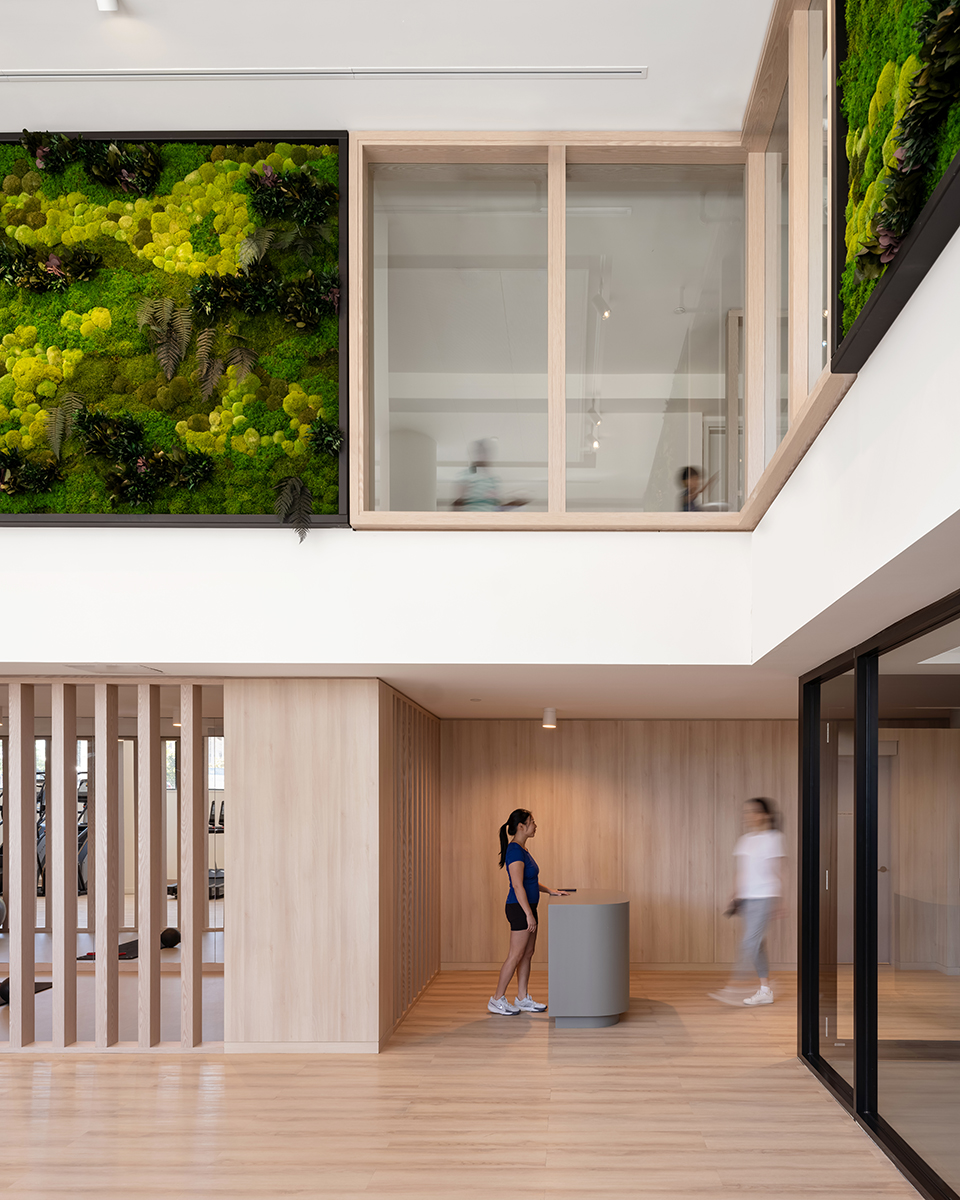
The design of the common spaces is rooted in an understanding of movement, visibility, and connection. Rather than isolating amenities as discrete rooms, the project organizes them as a network of interconnected environments aligned with primary circulation paths. The lobby, fitness spaces, lounges, co-working areas, and outdoor amenities are encountered as part of daily routines, allowing activity to unfold in view and encouraging informal interaction. Visibility plays a central role in this strategy. Shared spaces are positioned along circulation routes and partially revealed through layered openings and sightlines, enabling residents to intuit how spaces are used. This reduces barriers to participation while maintaining a balance between openness and privacy.
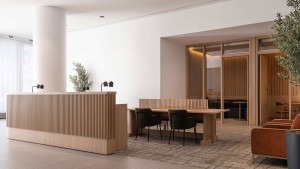
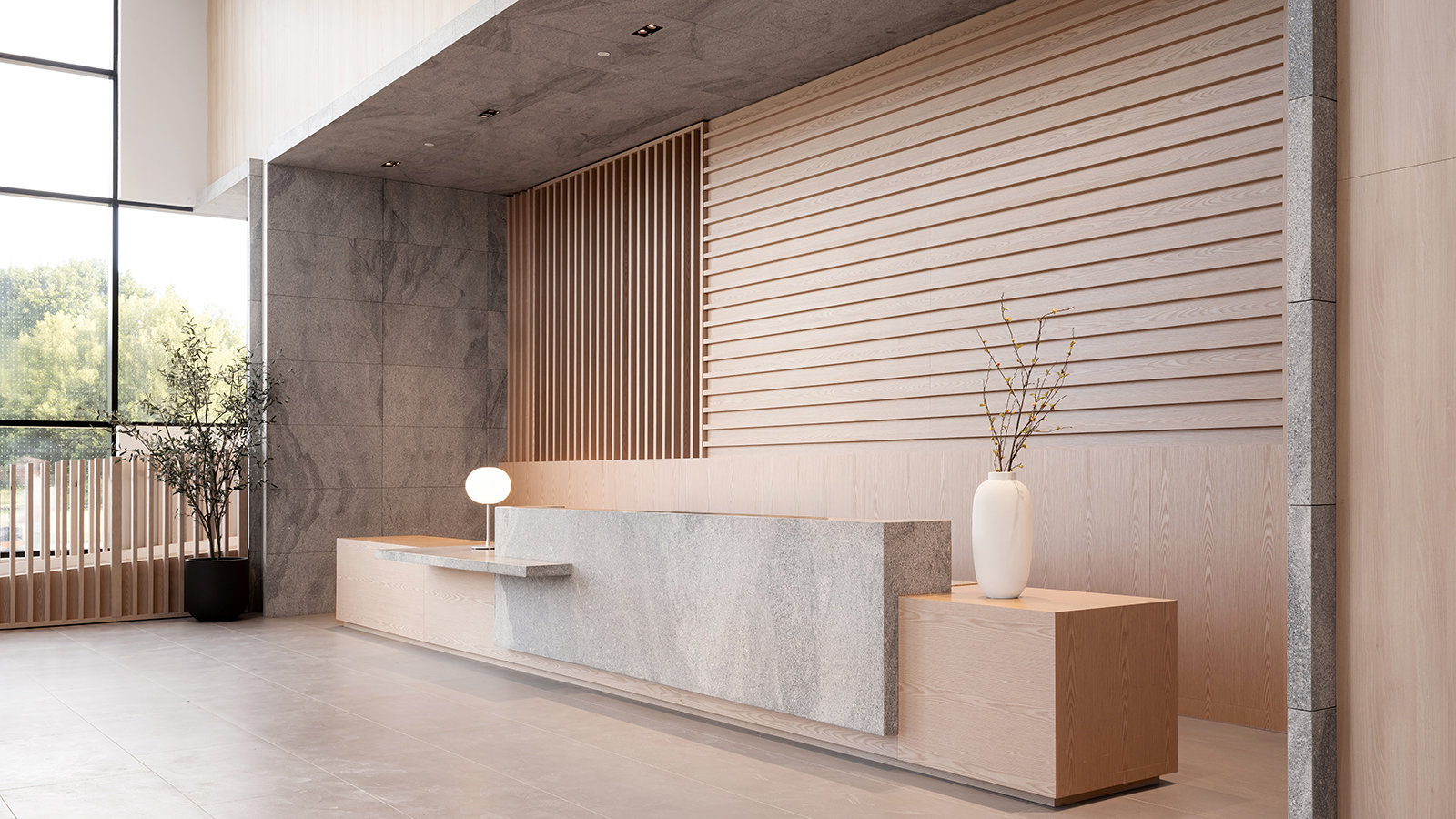
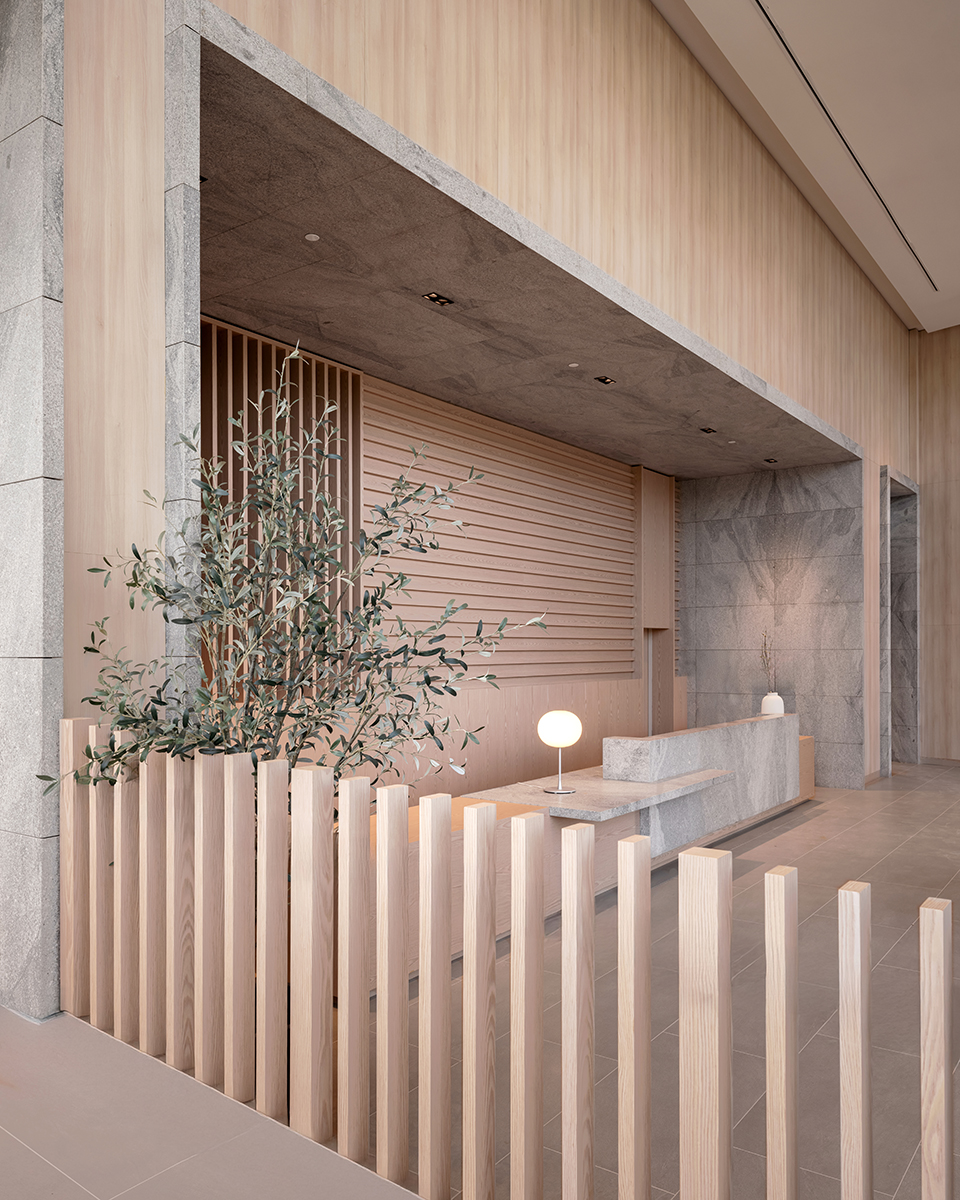
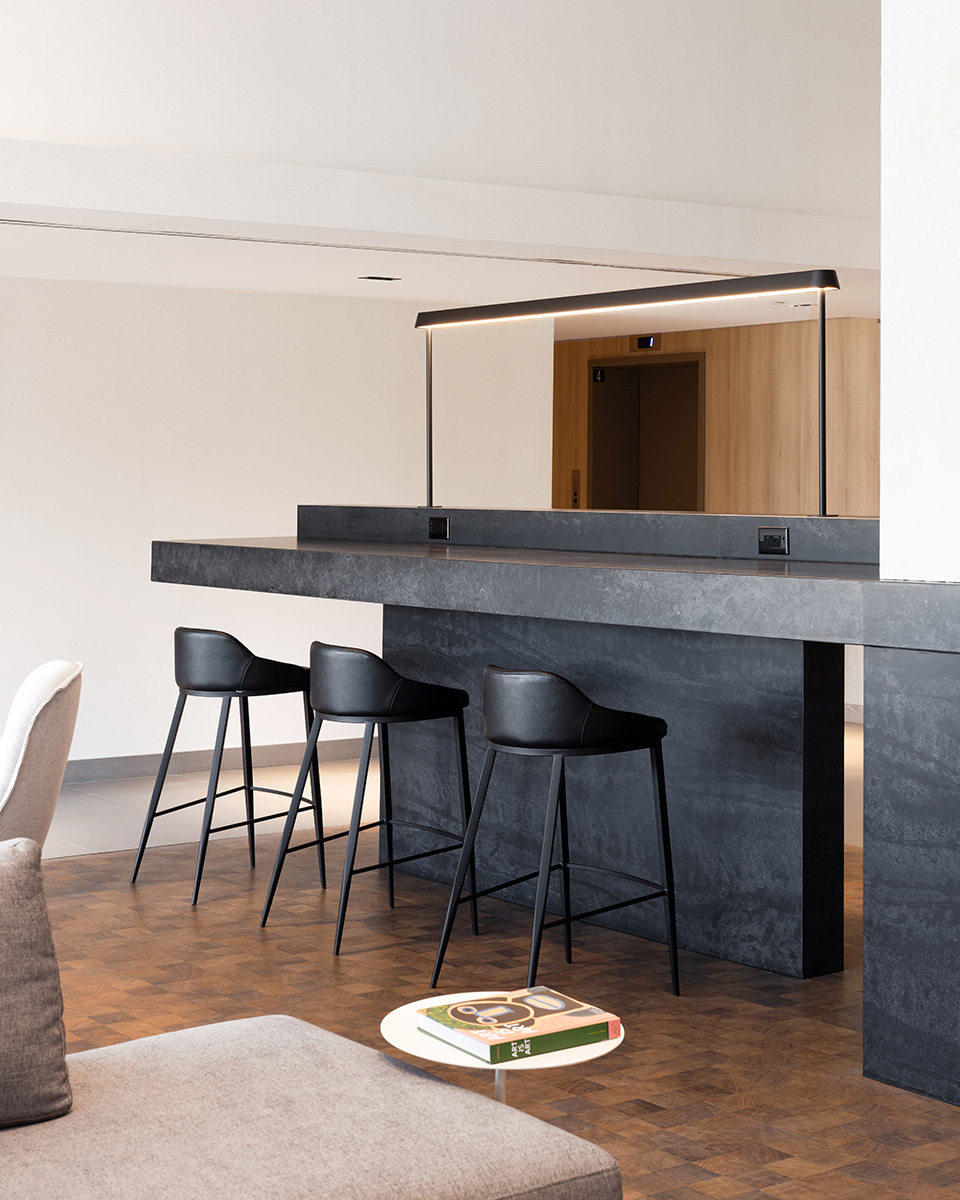
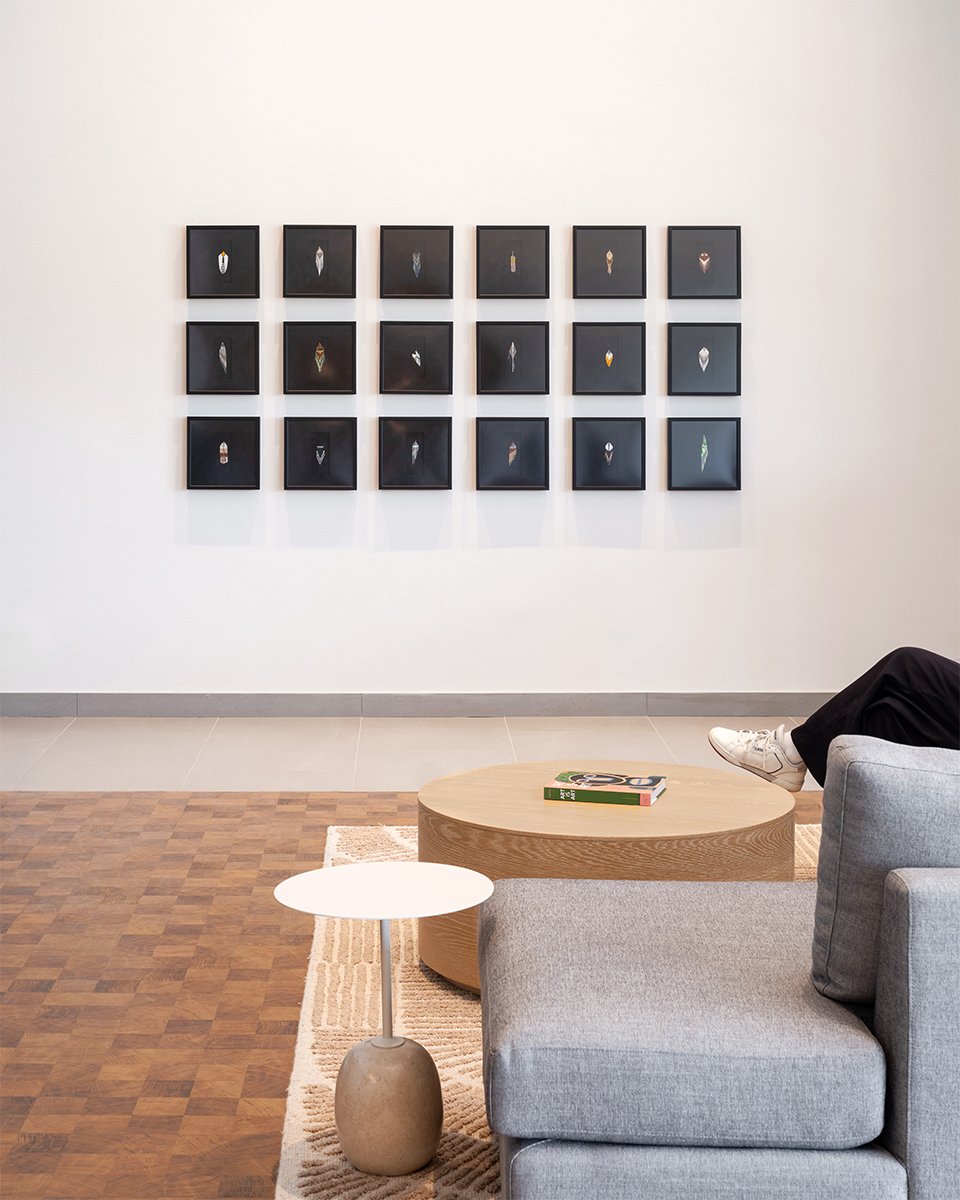
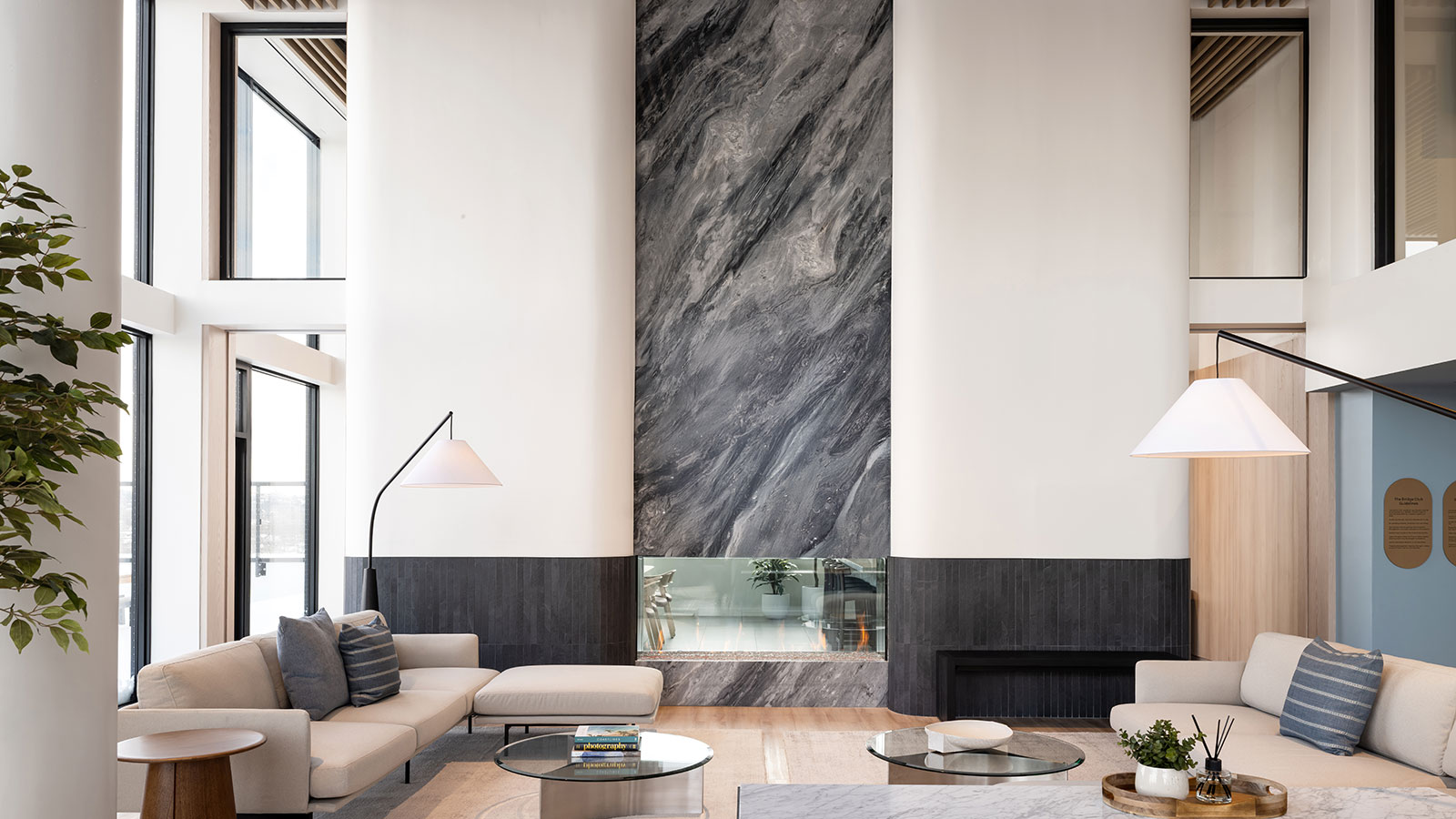
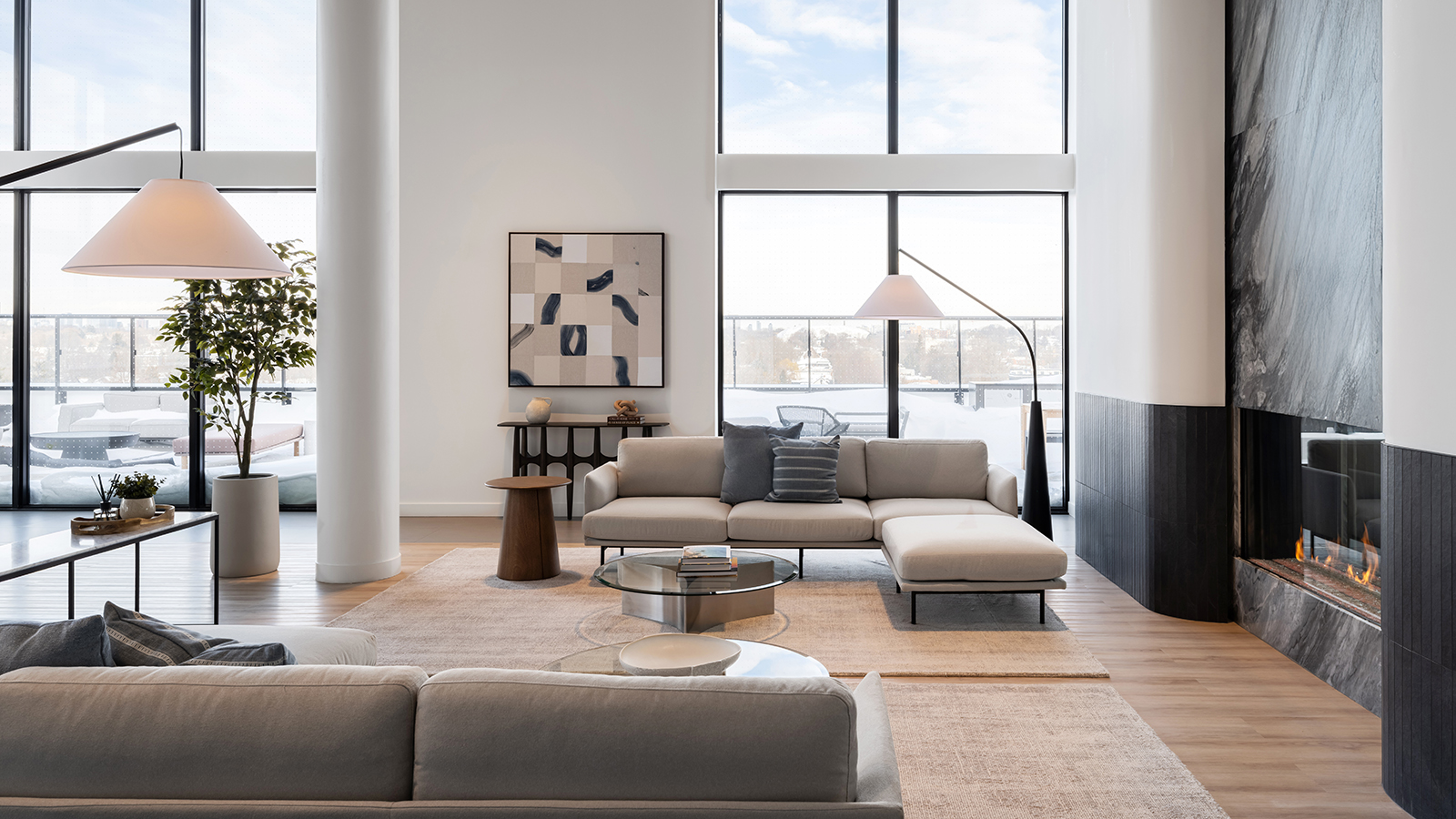
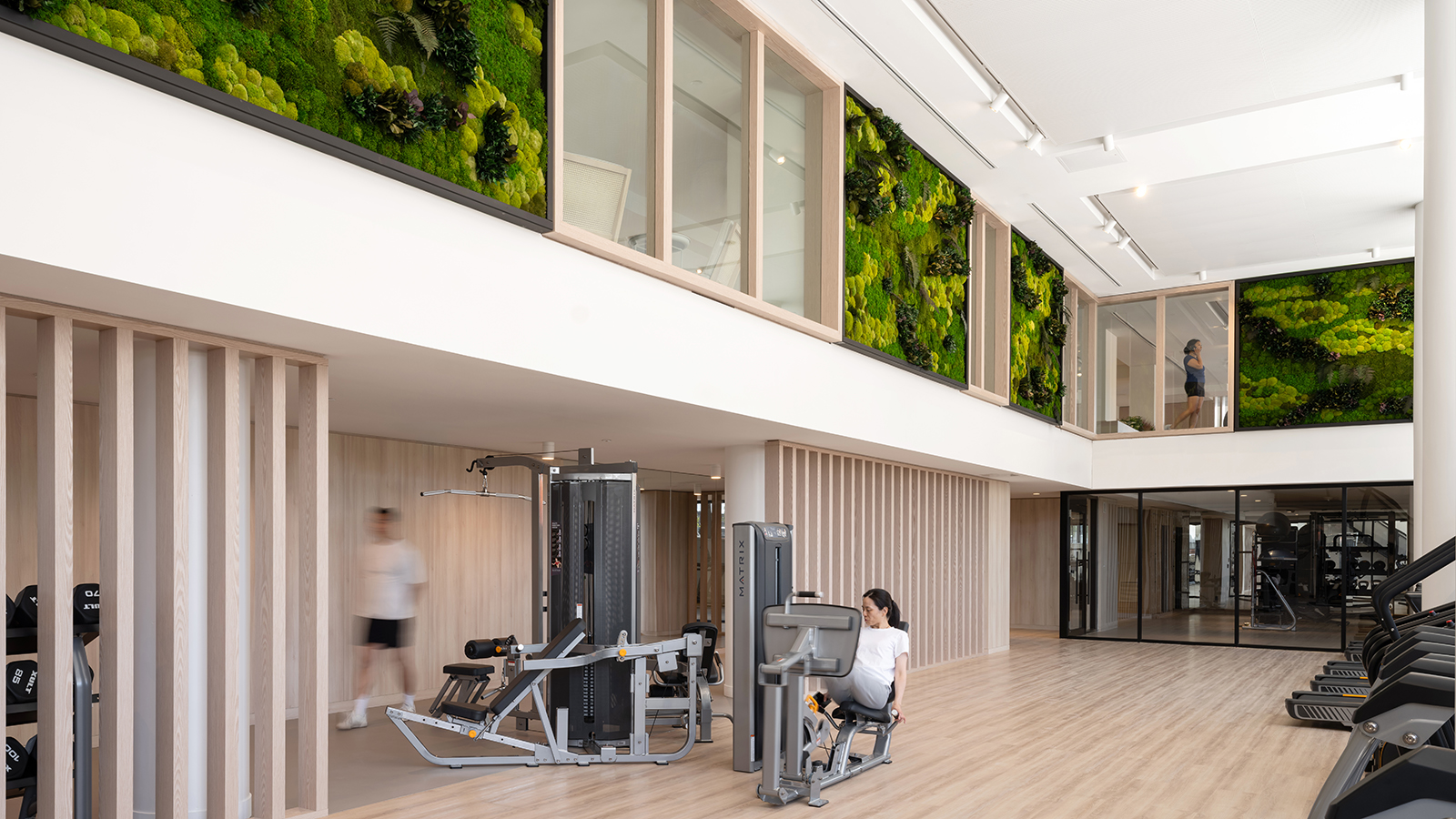
The lobby functions as both entry and a collective living space. Defined by long views and a restrained material palette, it supports moments of pause, transition, and informal gathering. Furnished at a residential scale, it avoids the formality of a reception area and instead operates as an extension of domestic space within a shared environment. Fitness and wellness areas are integrated into this spatial system. Positioned along key routes and designed with visual openness, they contribute to a continuous interior landscape where movement becomes part of the broader experience of the building.
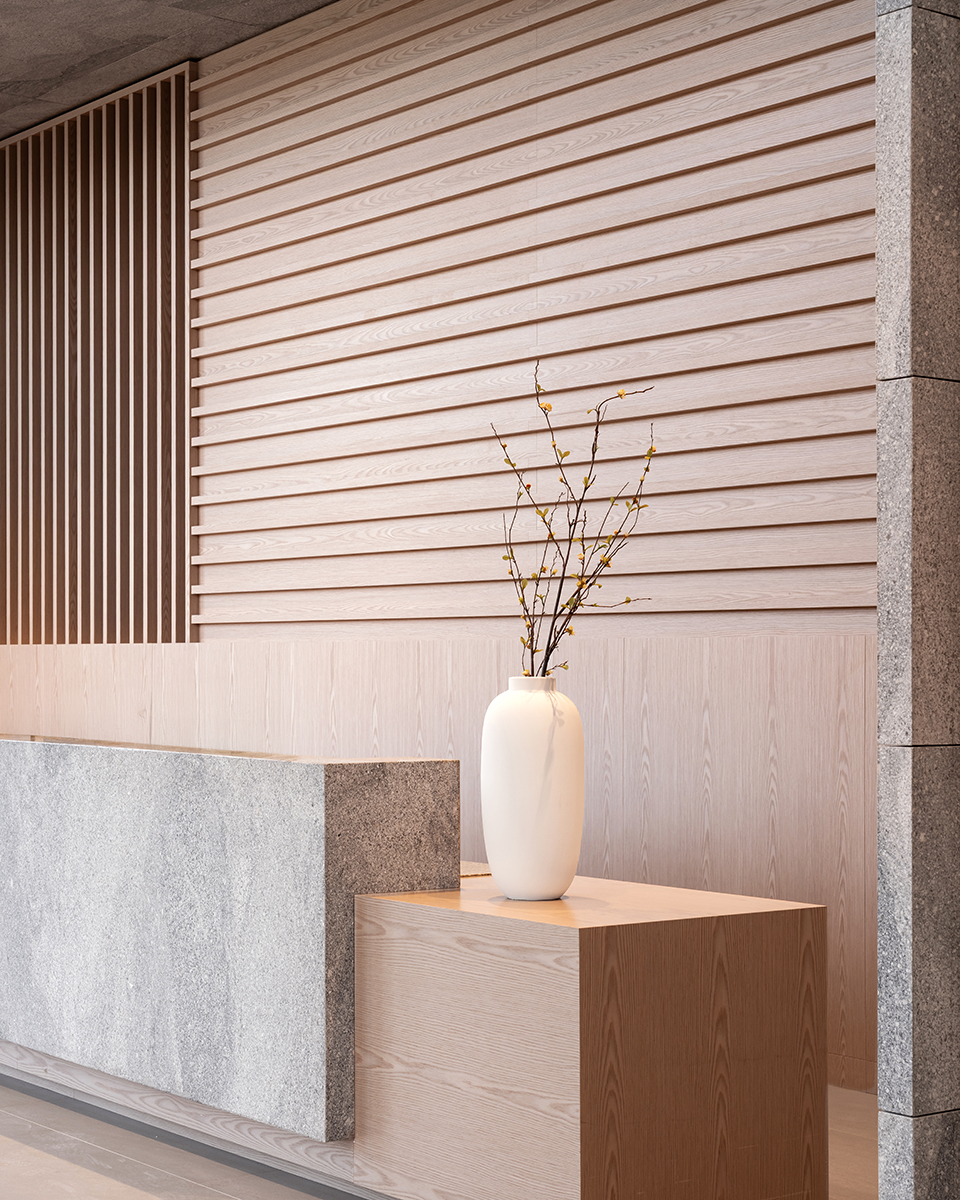
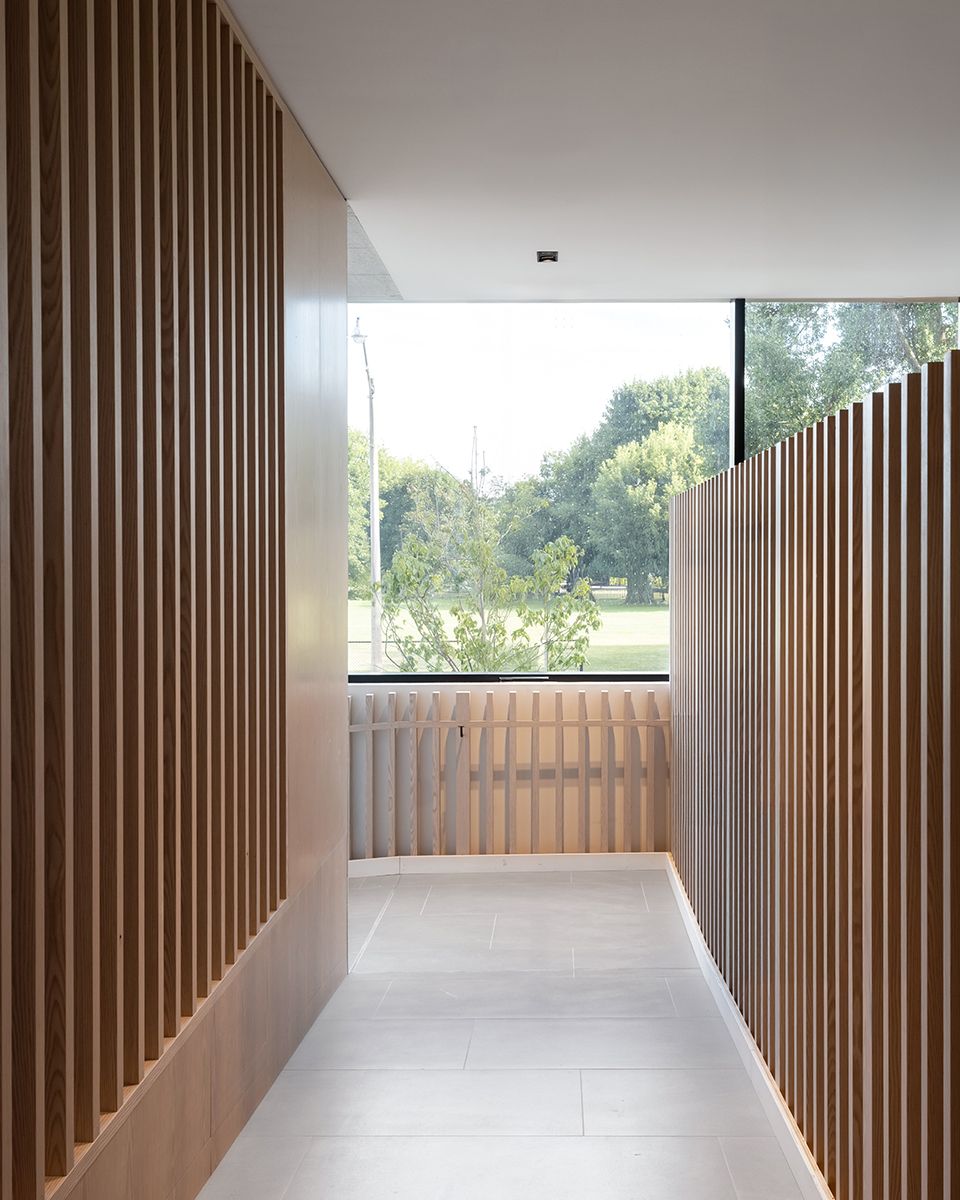
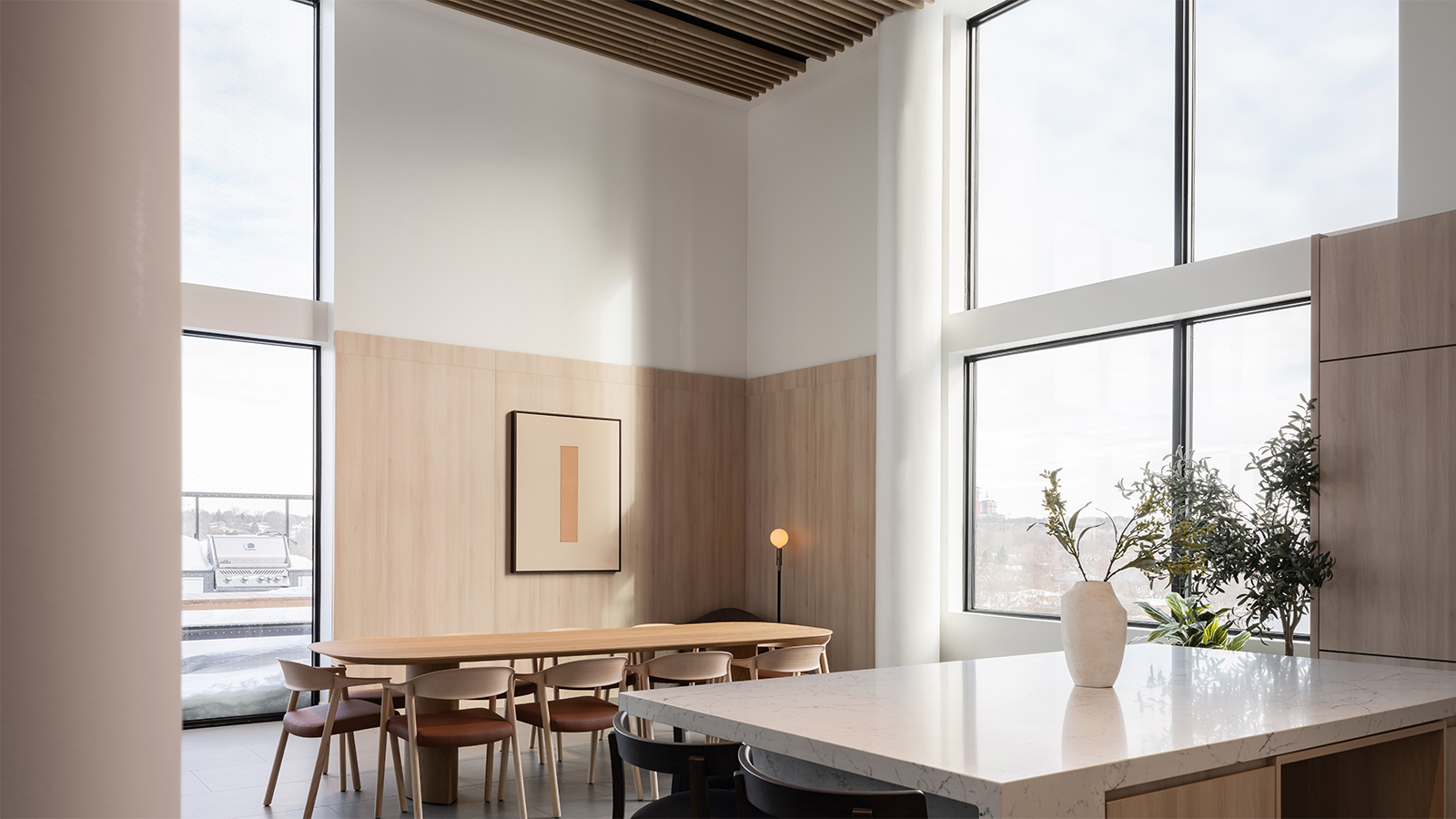
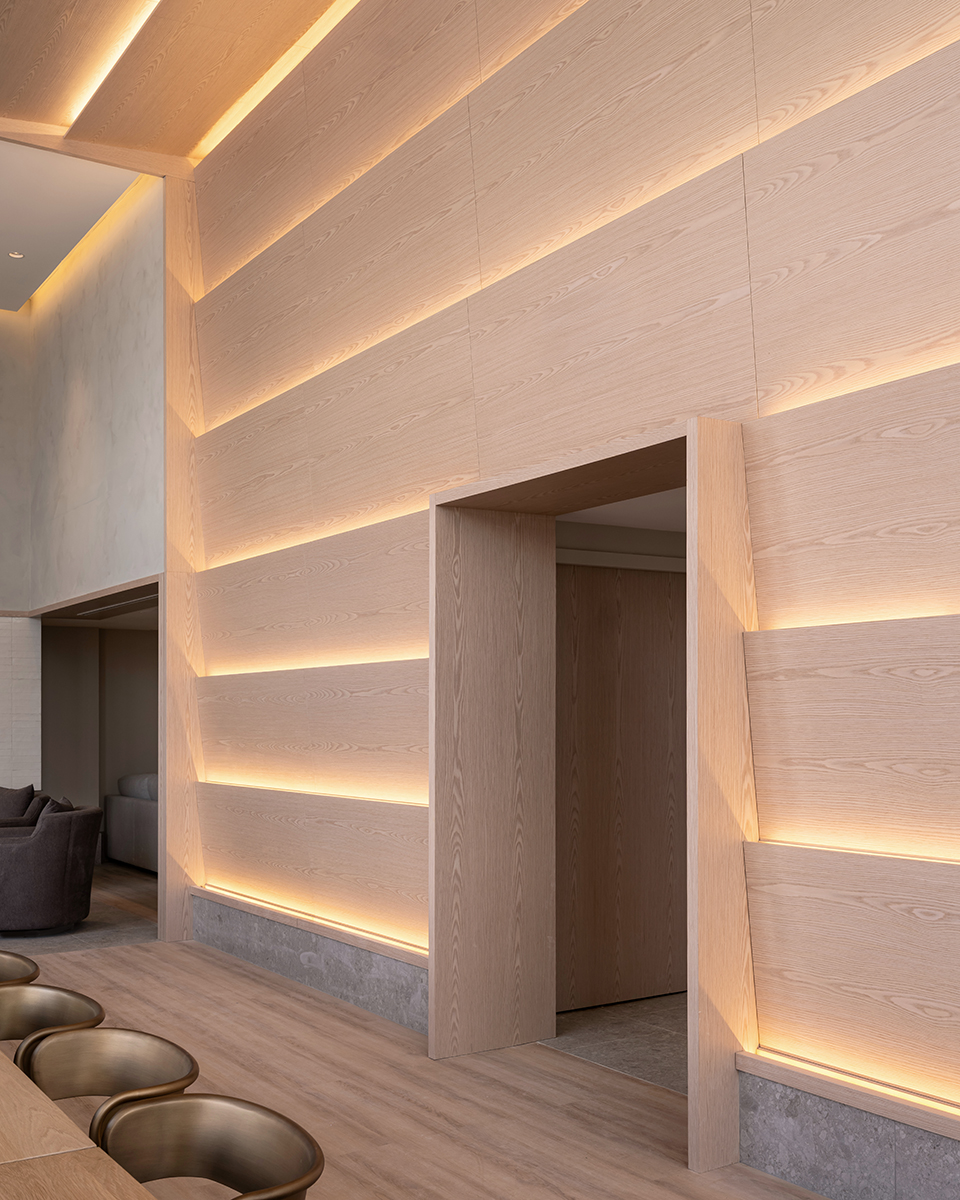
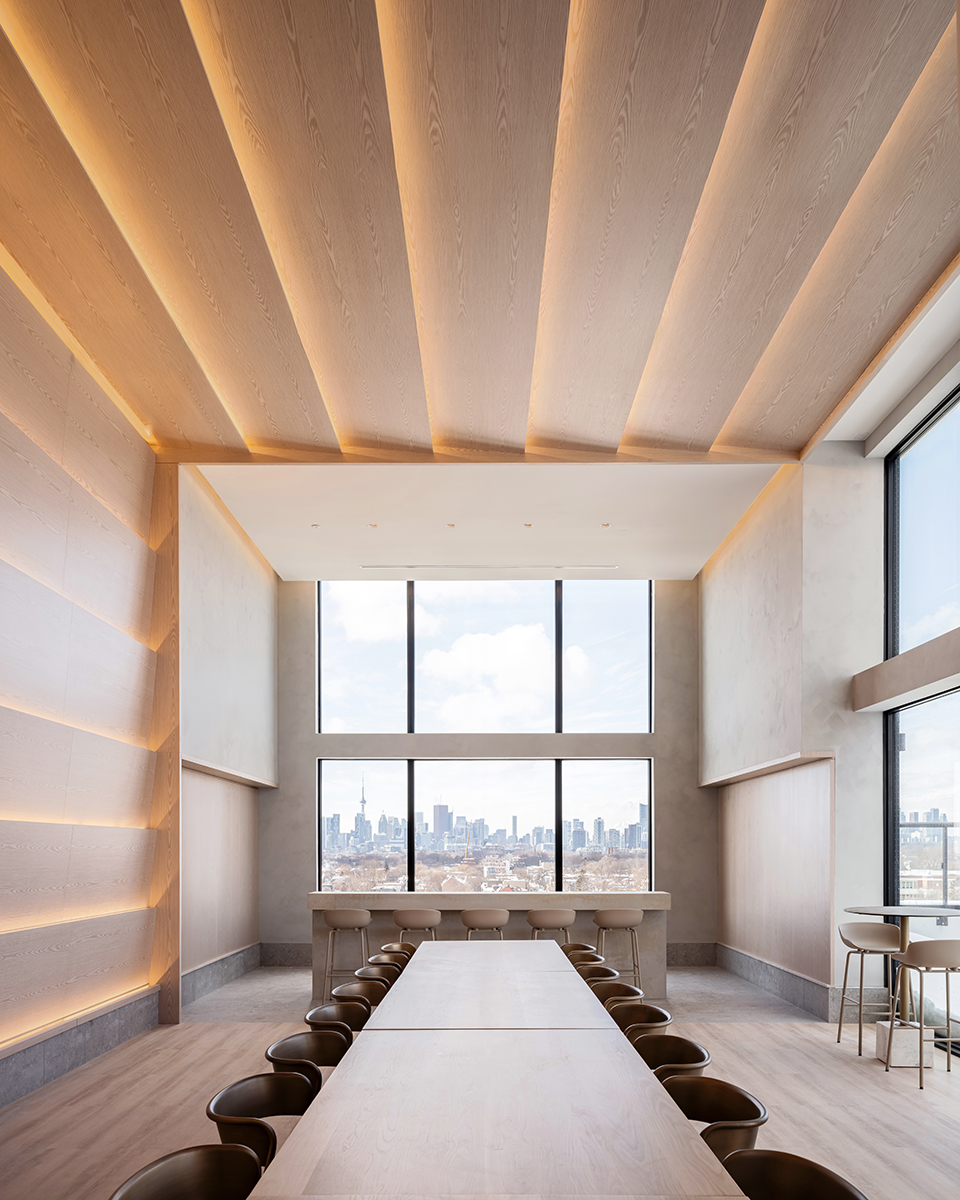
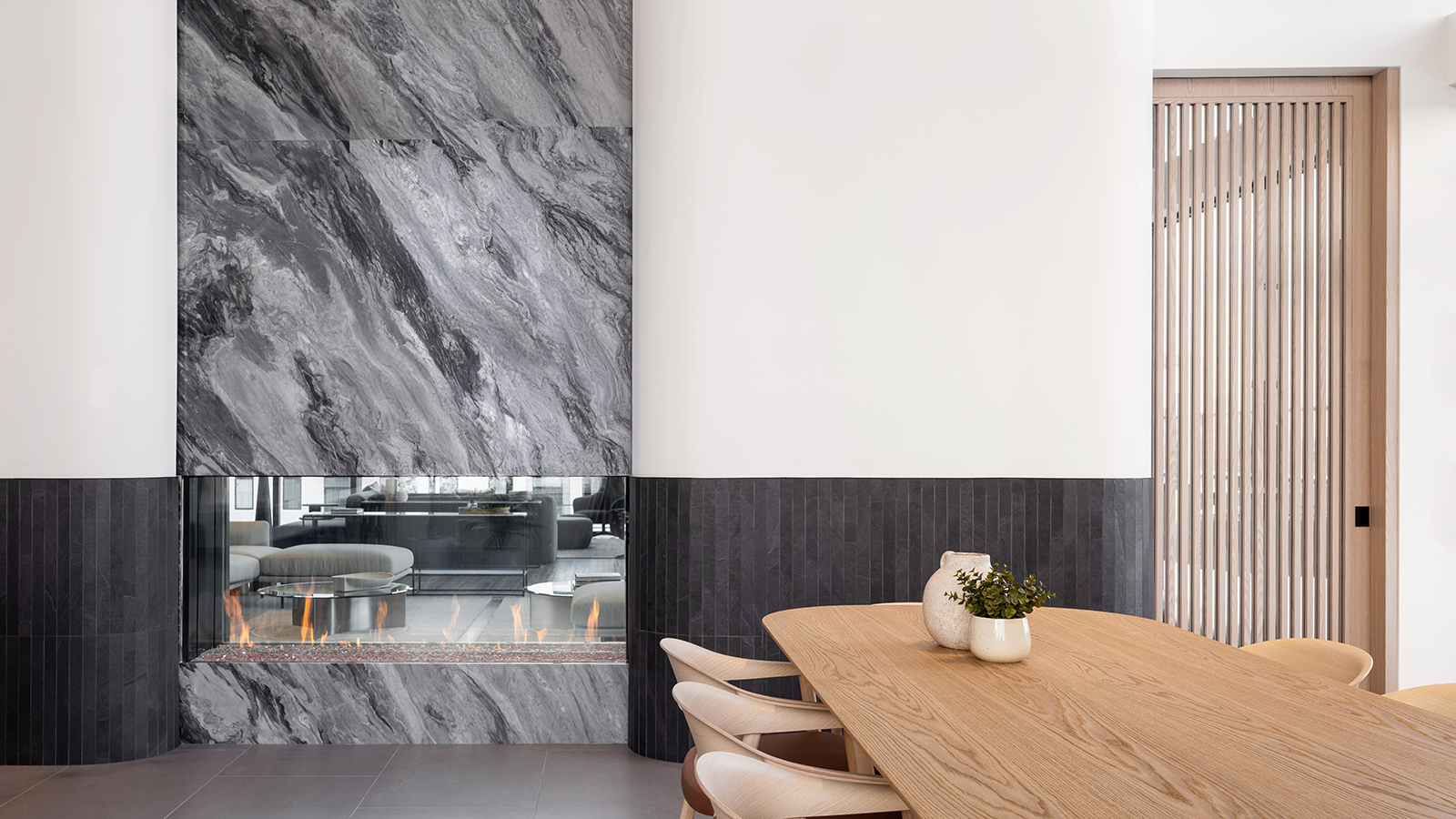
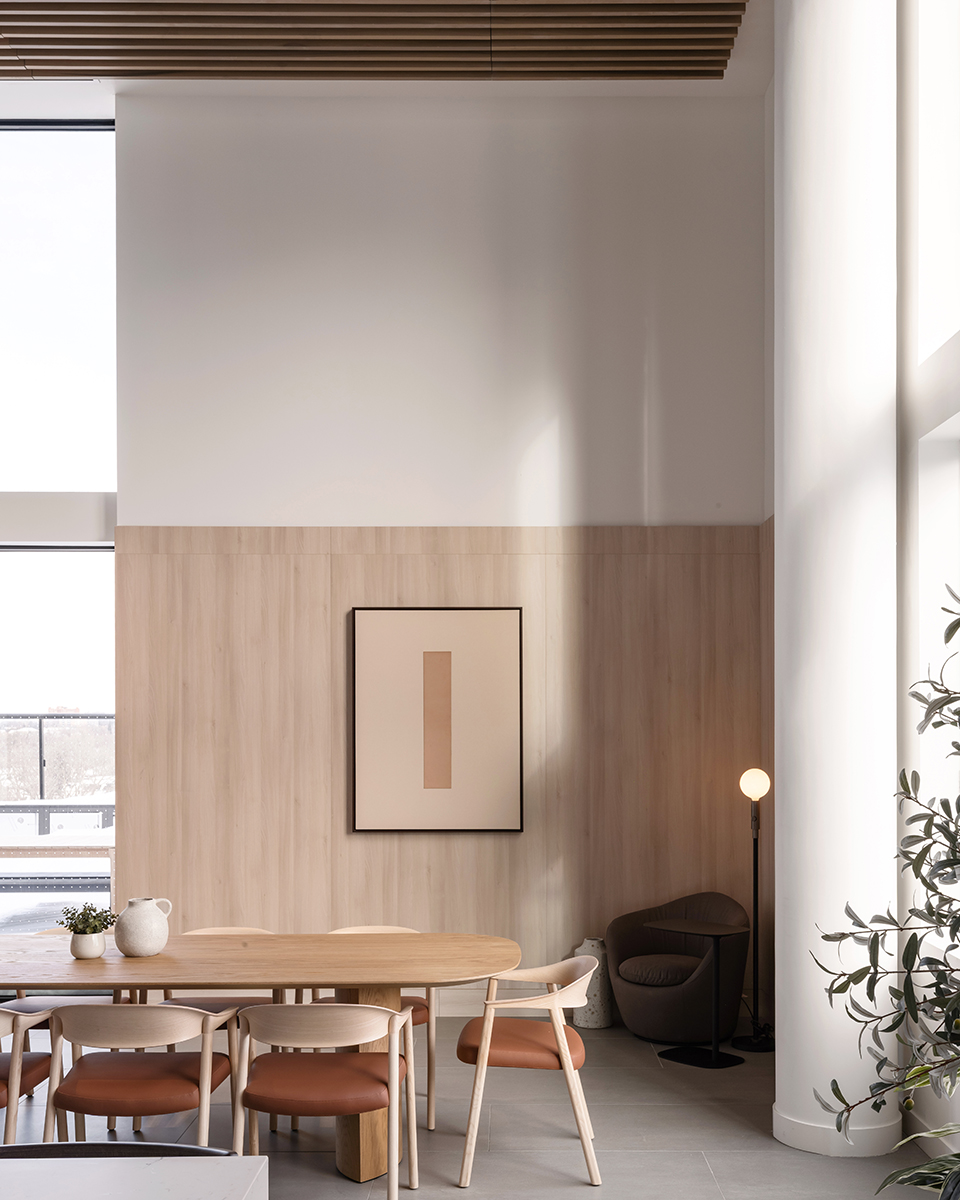
Materially, the project draws from its waterfront context. The palette references the textures and tones of Lake Ontario and the surrounding parkland, using stone surfaces, weathered wood tones, and layered finishes that evoke driftwood and shoreline conditions. Glazing and orientation reinforce visual connections to the adjacent park and bay, ensuring that interior spaces remain linked to the larger landscape.
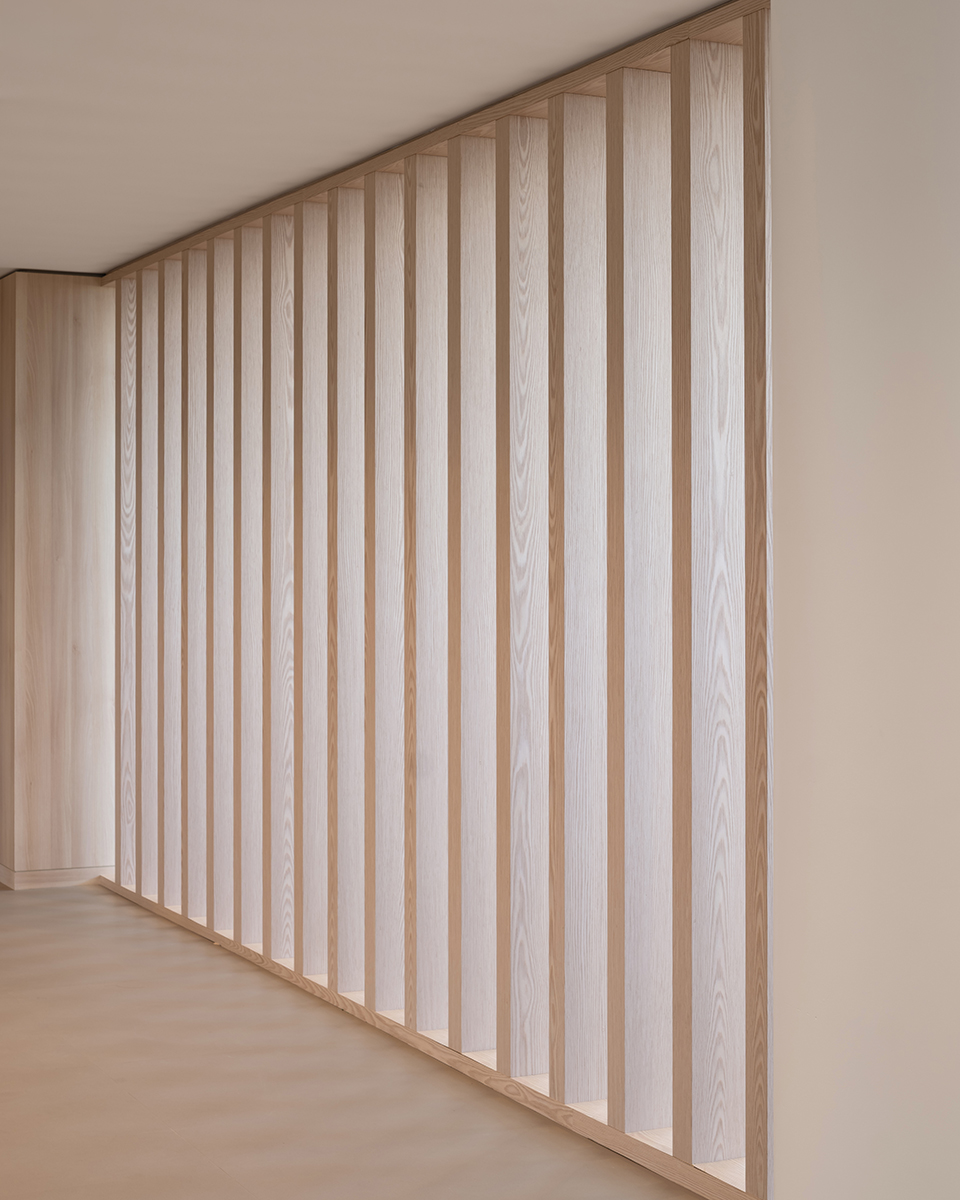
Across all amenity spaces, permeable boundaries, such as wood slat partitions, vertical openings, and filtered sightlines, allow light and activity to move between zones while maintaining spatial definition. This creates a gradient of experience, from active and social to quiet and individual, without rigid separation.
Through this approach, Mason Studio reframes the common areas as the primary architecture of collective life. A spatial framework that structures how the building is experienced, shared, and inhabited over time, reflecting the studio’s commitment to designing environments that foster connection, inclusivity, and a strong sense of belonging.